Have you ever finished a drawing or painting that looked technically correct but just felt... off? The proportions were right, the shading was decent, but something about it felt flat and unconvincing. Chances are the problem wasn't your technique — it was your composition.
Most beginners make the same mistakes. They centre everything out of habit. They scatter detail evenly across the canvas with no clear focal point. They paint every area with the same level of contrast so the eye has nowhere to land. They add a foreground, midground, and background but treat them all the same way, wondering why the painting looks flat. And almost everyone learns the rule of thirds and thinks that's the whole story — when really it's just the beginning.
Composition is what separates a painting that stops people in their tracks from one that gets scrolled past. And the good news is it's learnable. Here are five principles that will change how you think about every drawing and painting you make.
1. The Rule of Thirds — and When to Break It
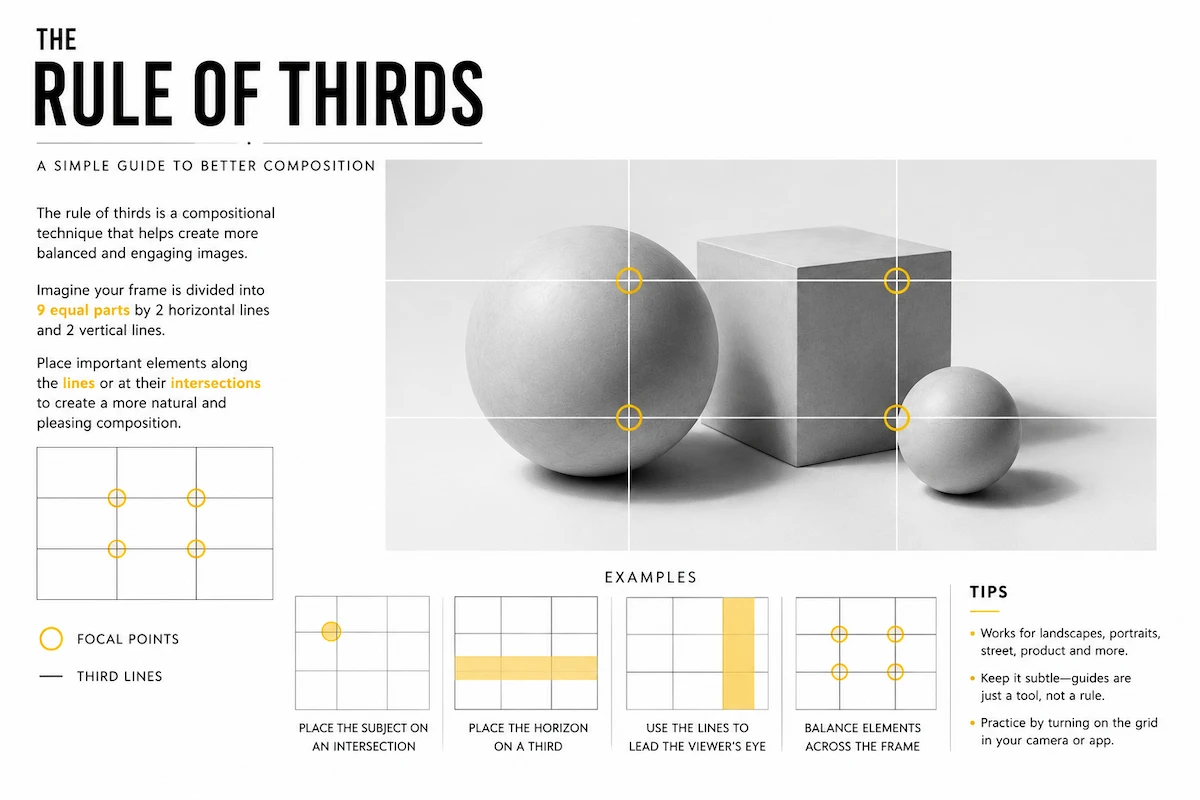
Start here because it's the foundation. The rule of thirds works because off-centre subjects create visual tension — the eye has somewhere to travel, and the empty space around the subject gives the composition room to breathe.
But it's a starting point, not a law. Centred compositions work powerfully when you want to convey stillness, symmetry, or confrontation. A portrait centred on the canvas feels direct and intense. A centred architectural drawing feels formal and imposing. Knowing when to break the rule is just as important as knowing the rule.
The question to ask isn't "am I following the rule of thirds?" It's "where do I want the viewer's eye to go, and does this composition take it there?"
2. The Focal Point — Where Maximum Contrast Lives
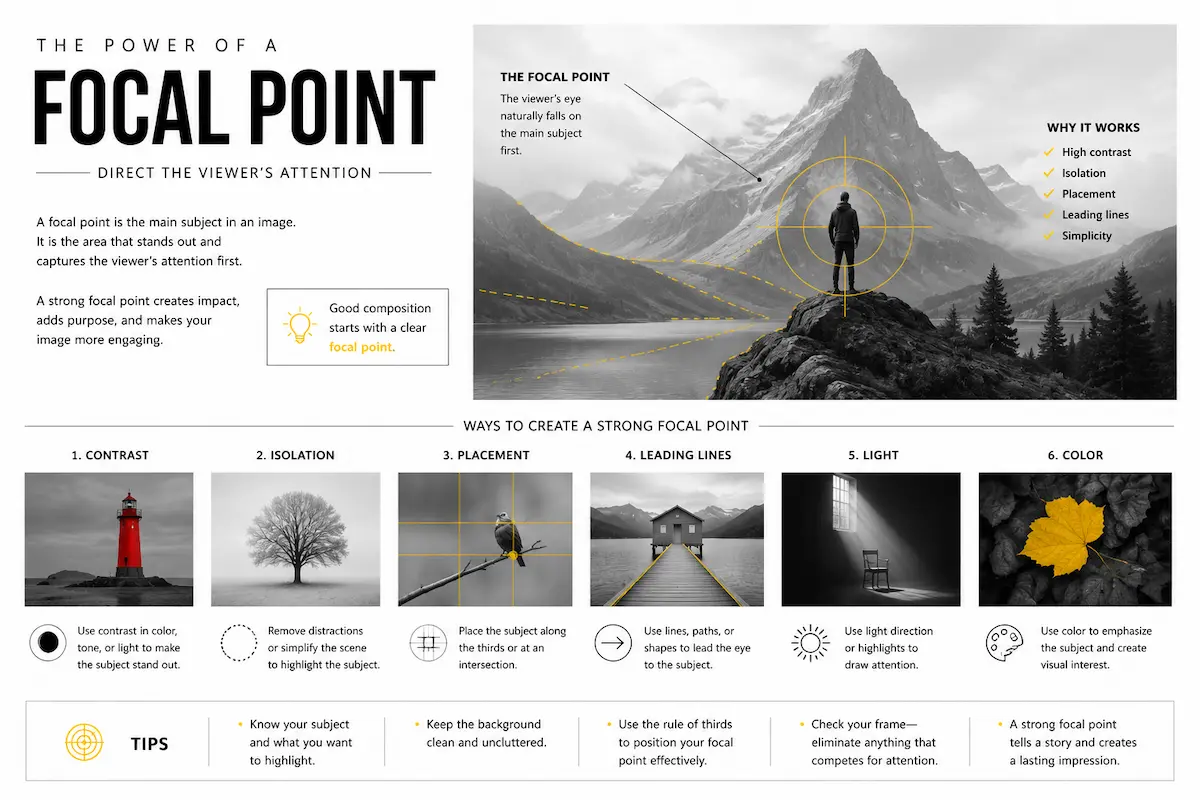
Every strong composition has one area of maximum contrast — the place where the lightest light meets the darkest dark, or where the most detail lives against a simpler background. That's your focal point, and the viewer's eye goes there first every time.
The mistake most beginners make is spreading contrast evenly across the canvas. Every area has the same level of detail, the same tonal contrast, the same level of finish. The result is a composition with no clear entry point — the eye wanders without landing anywhere.
Decide on your focal point before you start. Then deliberately reduce contrast, detail, and saturation in every other area of the painting to support it. A focal point only works if the rest of the composition is quieter.
3. Leading Lines — Guiding the Eye Through the Composition
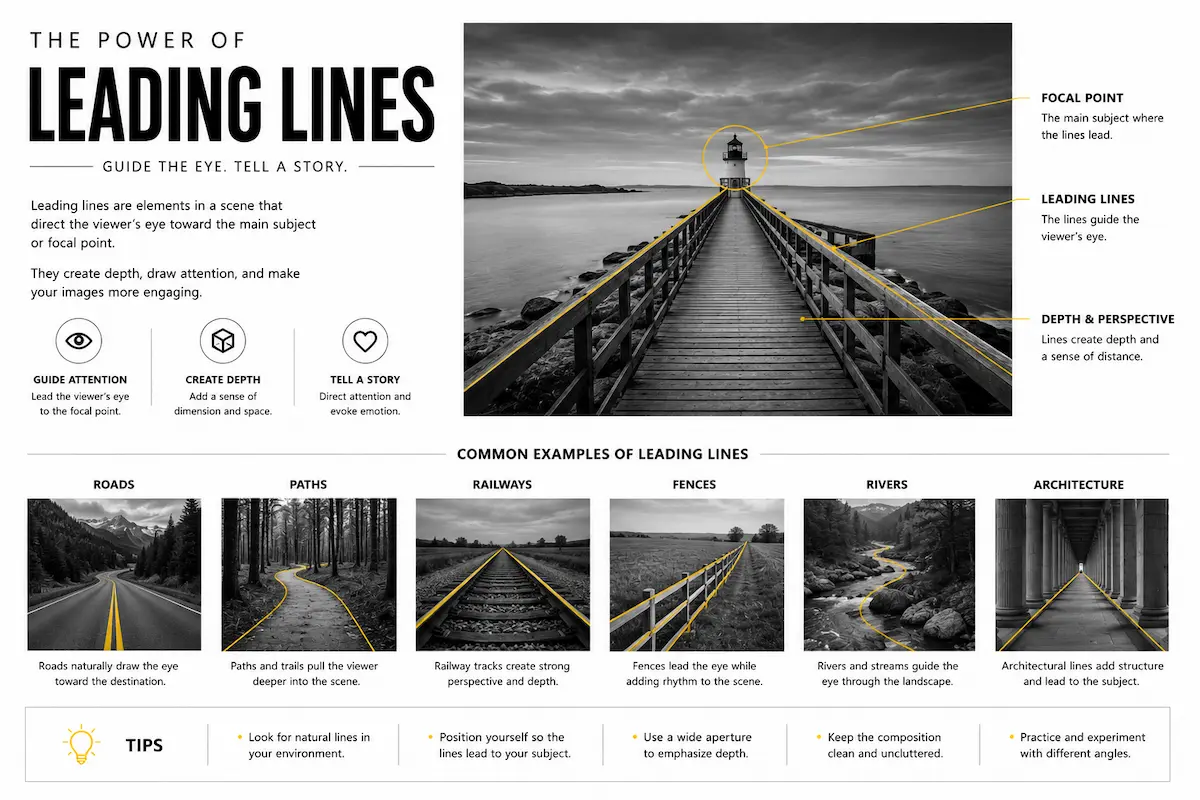
Lines within a composition — roads, rivers, fence lines, the angle of a figure's arm, even the direction someone is looking — naturally guide the viewer's eye. Used deliberately, they can pull attention toward the focal point, create a sense of depth, or lead the viewer on a deliberate journey through the image.
The most powerful leading lines point toward the focal point. A road that curves into the distance and leads to a lone tree on the horizon. A river that winds through a landscape and draws the eye to a cottage on the far bank. The viewer follows the line without realising they're being guided.
Watch out for lines that lead the eye out of the composition — a road that exits at the corner, a figure looking out of the frame. These create visual leakage that weakens the entire composition.
4. Foreground, Midground, Background — Creating Depth on a Flat Surface
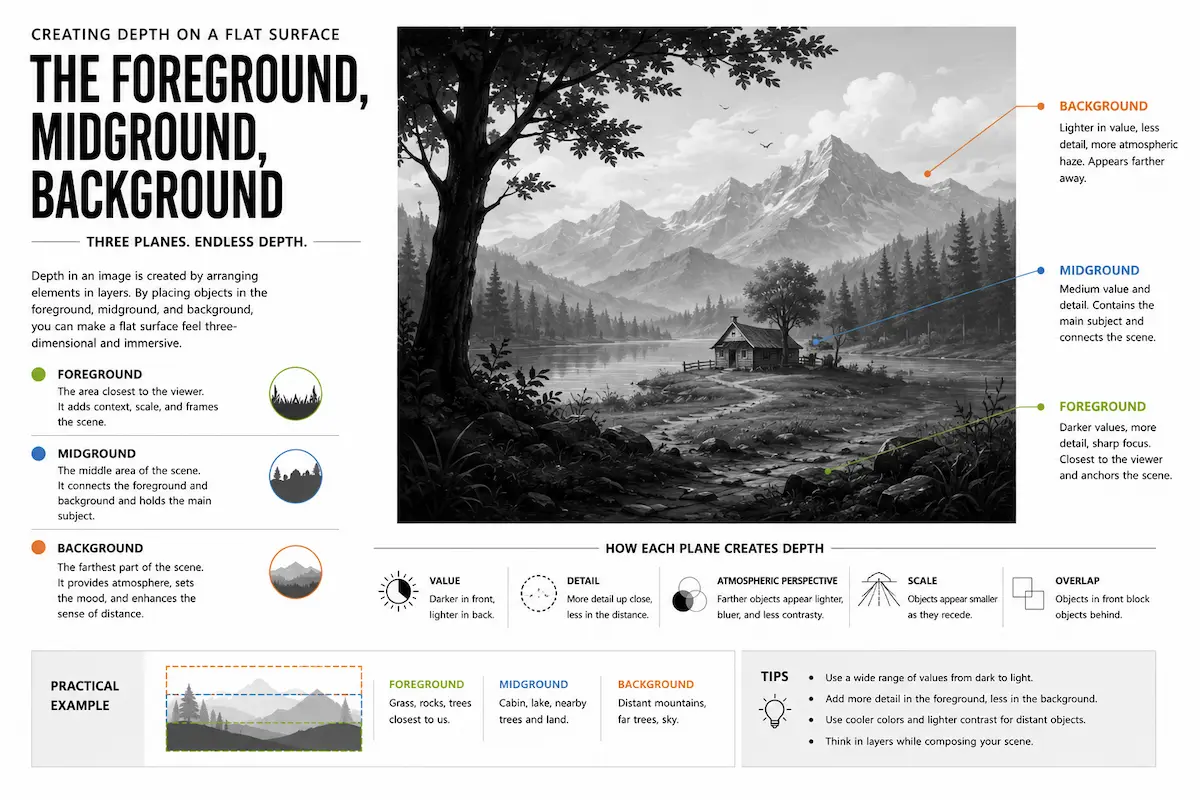
A flat painting that reads as three-dimensional almost always has three distinct spatial zones working together. The foreground is closest to the viewer — typically darker, higher contrast, and more detailed. The midground is where the focal point usually lives. The background recedes into the distance — lighter, cooler, less detailed, with softer edges.
This is atmospheric perspective at work. As objects recede into the distance, the atmosphere between you and them reduces contrast, warms or cools the colour temperature, and blurs the edges. A landscape that ignores this — where the distant mountains are as dark and detailed as the foreground rocks — will always look flat no matter how technically skilled the execution.
You don't need to paint every blade of grass in the foreground. But giving the foreground more visual weight than the background immediately creates the sense of depth that pulls a viewer into the painting.
5. Notan — The Light-Dark Pattern Beneath Everything
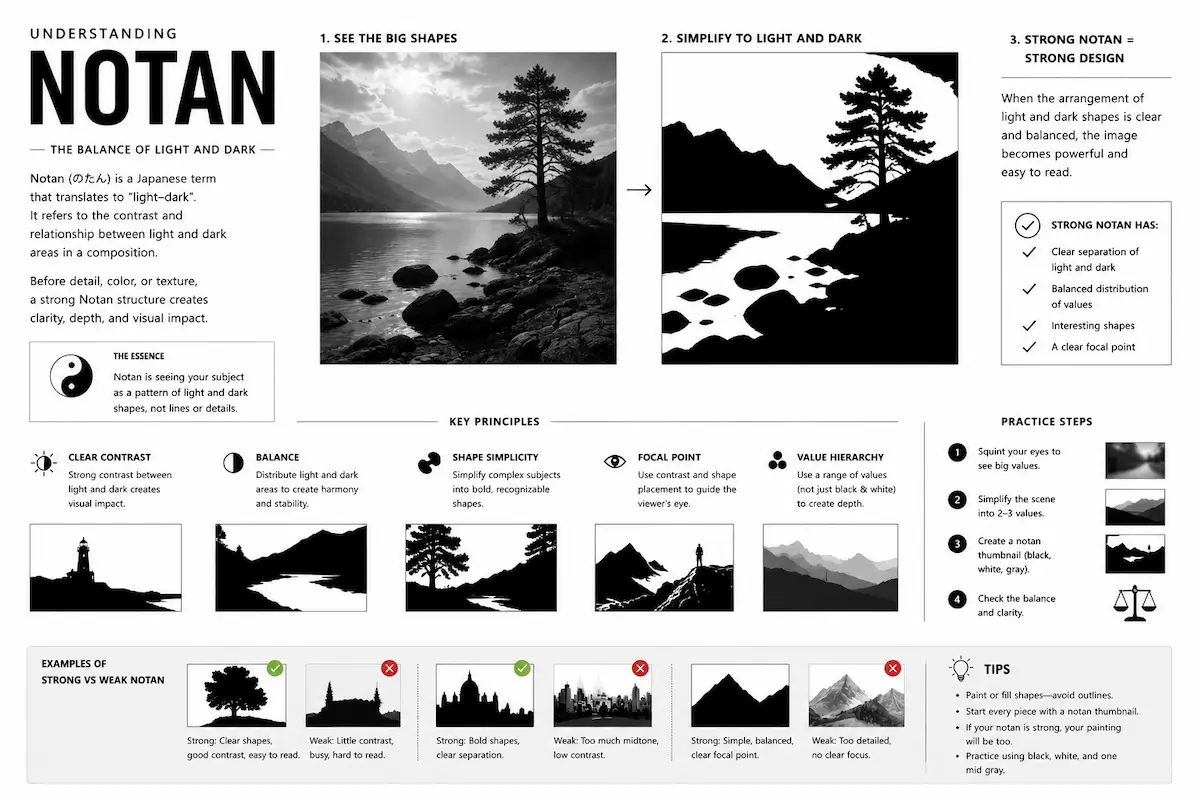
Notan is a Japanese concept meaning the balance and harmony of light and dark. In compositional terms it means this: before you think about colour, texture, or detail, your painting needs to work as a simple pattern of light and dark shapes.
The test is to squint at your reference or your finished painting until all detail disappears and you're left with only the big shapes of light and dark. Do those shapes create an interesting, balanced composition on their own? Is there a clear focal point in the value pattern? Do the light shapes and dark shapes create a pleasing rhythm across the canvas?
If the notan doesn't work, the painting won't work — no matter how much colour or detail you add on top. This is why experienced painters often do a quick 2-minute thumbnail sketch in just two values — black and white — before starting any serious painting. It's the fastest way to check whether a composition has the bones to support a full piece.
Putting It Together
These five principles aren't rules to follow mechanically. They're tools for understanding why some compositions feel powerful and others feel flat. The more you study paintings you admire through the lens of focal point, leading lines, spatial depth, and notan, the more these principles become instinctive rather than something you have to consciously apply.
Next time you're stuck on a composition, squint at it. Where does your eye go first? Where does it get stuck? Where does it fall out of the frame? The answers will tell you exactly what to fix.